
What is a CCMS, and Why You Need One
The 20-minute primer on component content management.
Primer
The 20-minute primer on component content management.
A clear, fast primer on what a Component Content Management System actually is — when you need one, when you don't, and what separates an enterprise-grade CCMS from a glorified Markdown editor.
 1 / 11
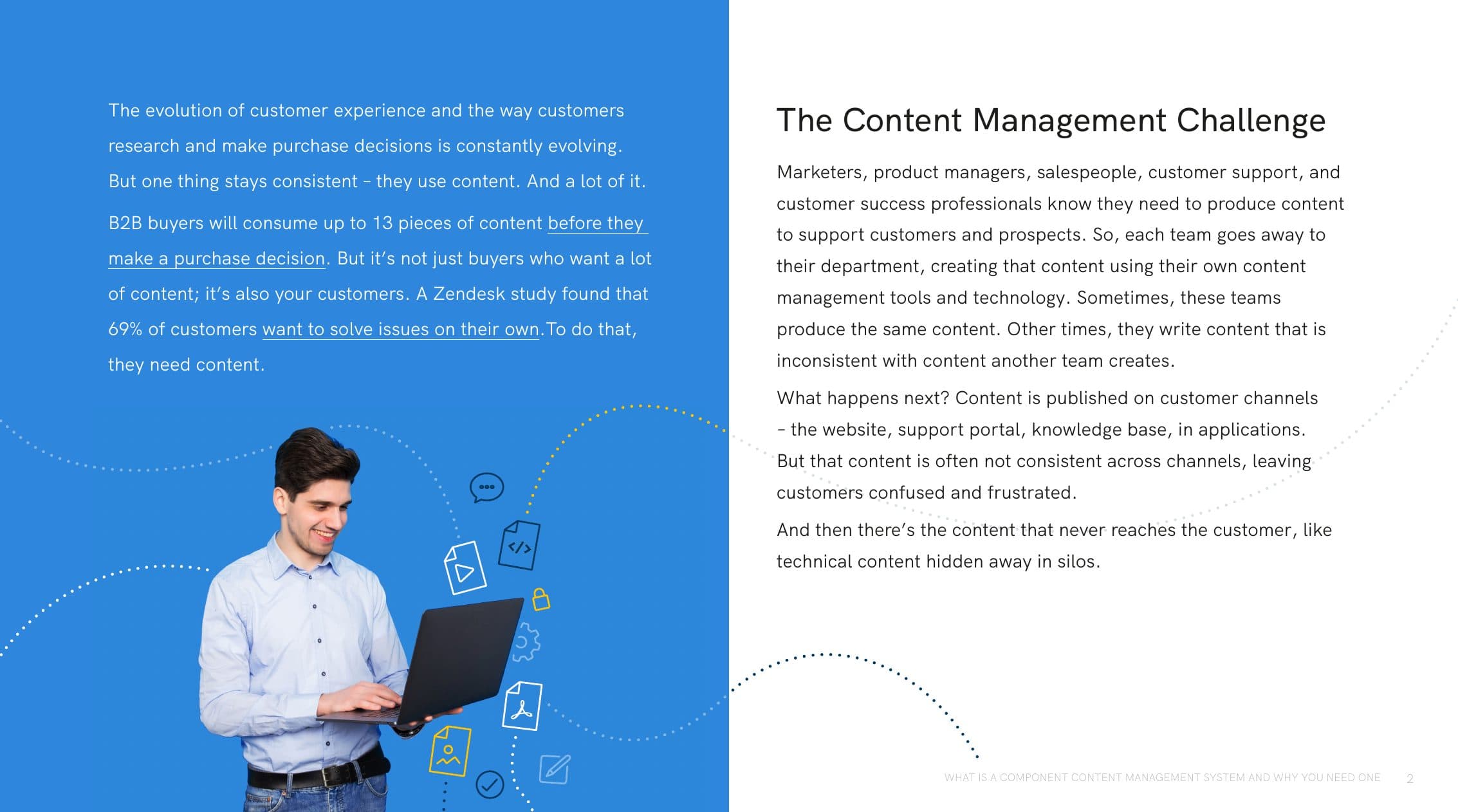 2 / 11
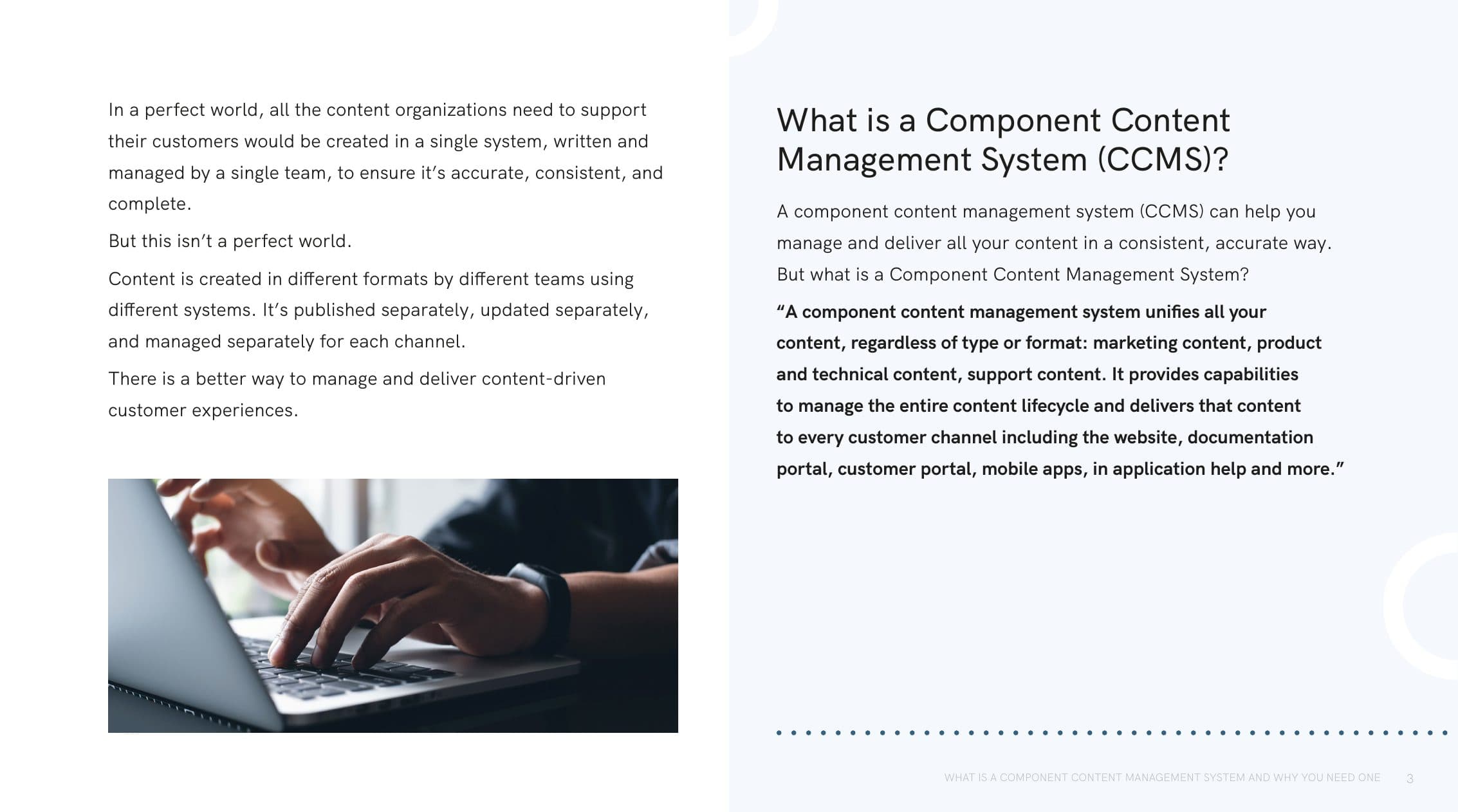 3 / 11
 4 / 11
 5 / 11
Liking it so far?
Tell us where to send the rest.
Drop your work email and we'll unlock the remaining pages right here, plus send the full PDF to your inbox so you can share it with your team.
- Read the rest in this browser, instantly
- Full PDF emailed for offline + sharing
- No phone calls. No spam. Unsubscribe any time.
By submitting, you agree to receive related DiscoverCX updates. Unsubscribe any time. Privacy.
 6 / 11
 7 / 11
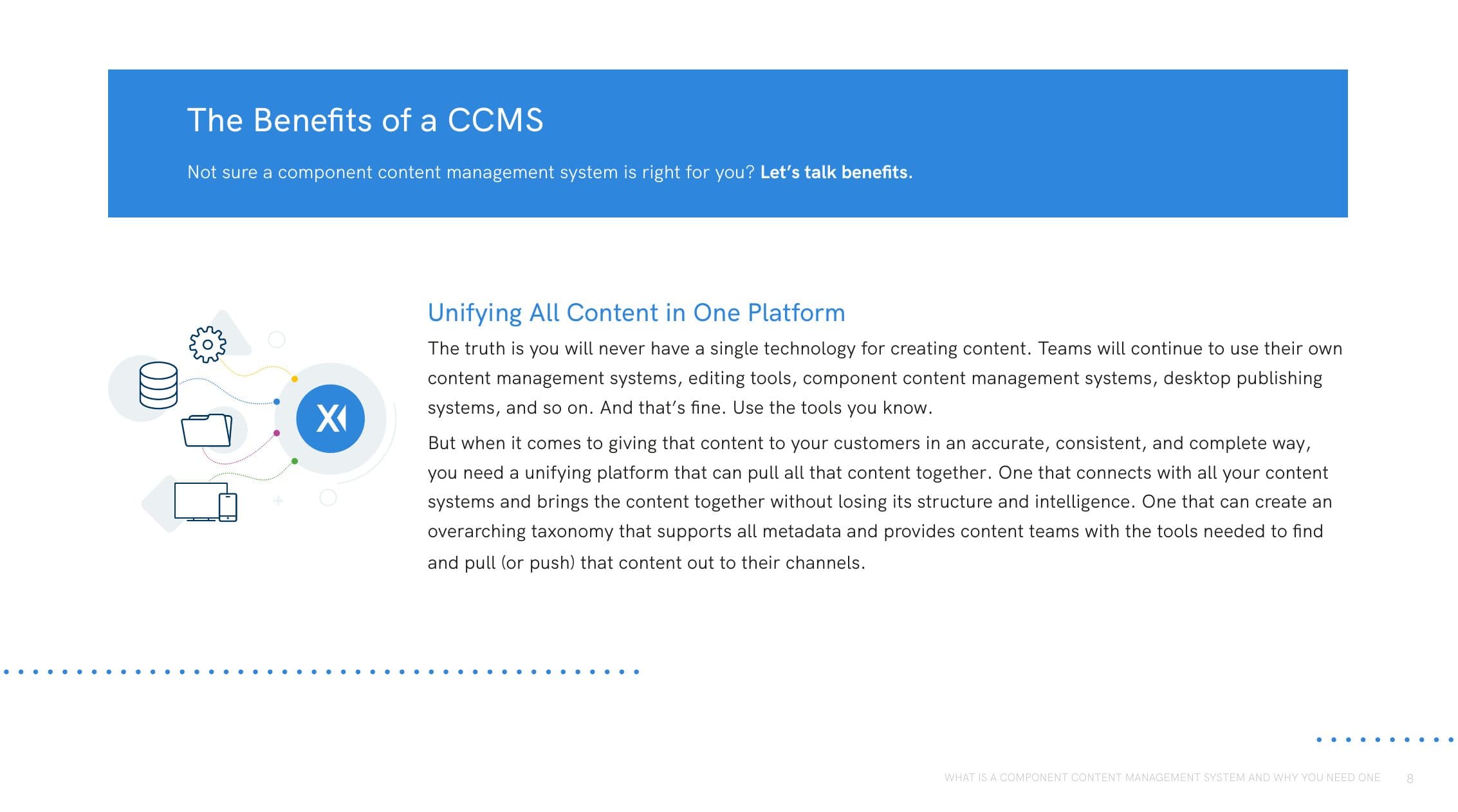 8 / 11
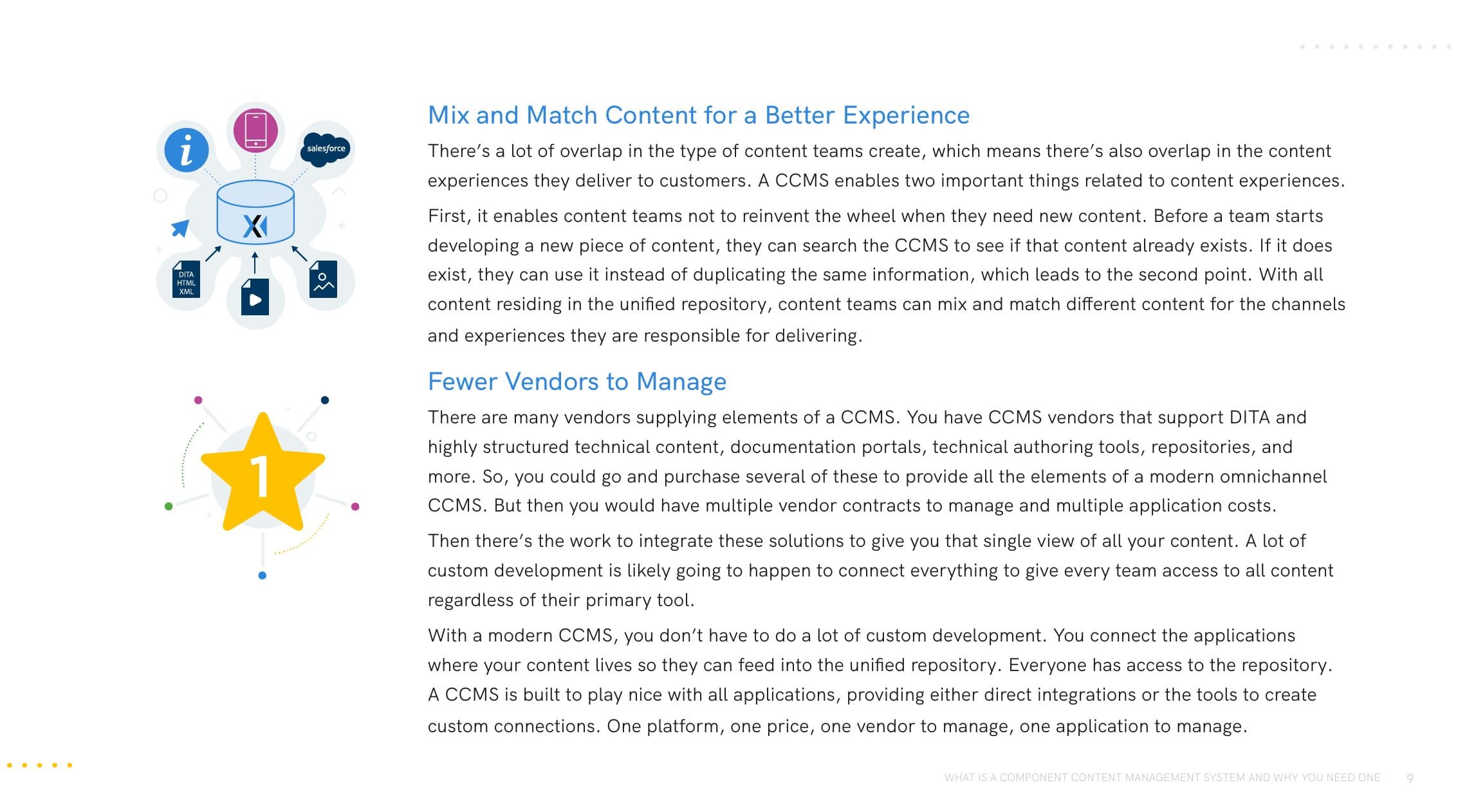 9 / 11
 10 / 11
 11 / 11
About this guide
What you'll learn.
A clear, fast primer on what a Component Content Management System actually is — when you need one, when you don't, and what separates an enterprise-grade CCMS from a glorified Markdown editor.
Key insights
- The five jobs only a CCMS can do well
- When a wiki or static-site generator is enough
- How structured content compounds reuse and translation savings
- The CCMS evaluation framework in one diagram
Ideal readers
- Documentation leaders making the case to executives
- Teams transitioning from unstructured to structured authoring
- Buying committees scoping a CCMS shortlist
What's inside
The table of contents, in plain English.

Read the playbook. Then talk to the team that wrote it.
A 45-minute working session with a solution architect — your stack, your roadmap, your real authoring or delivery problem.