
The DiscoverCX DITA Cheatsheet
Every DITA element you actually use, on one page.
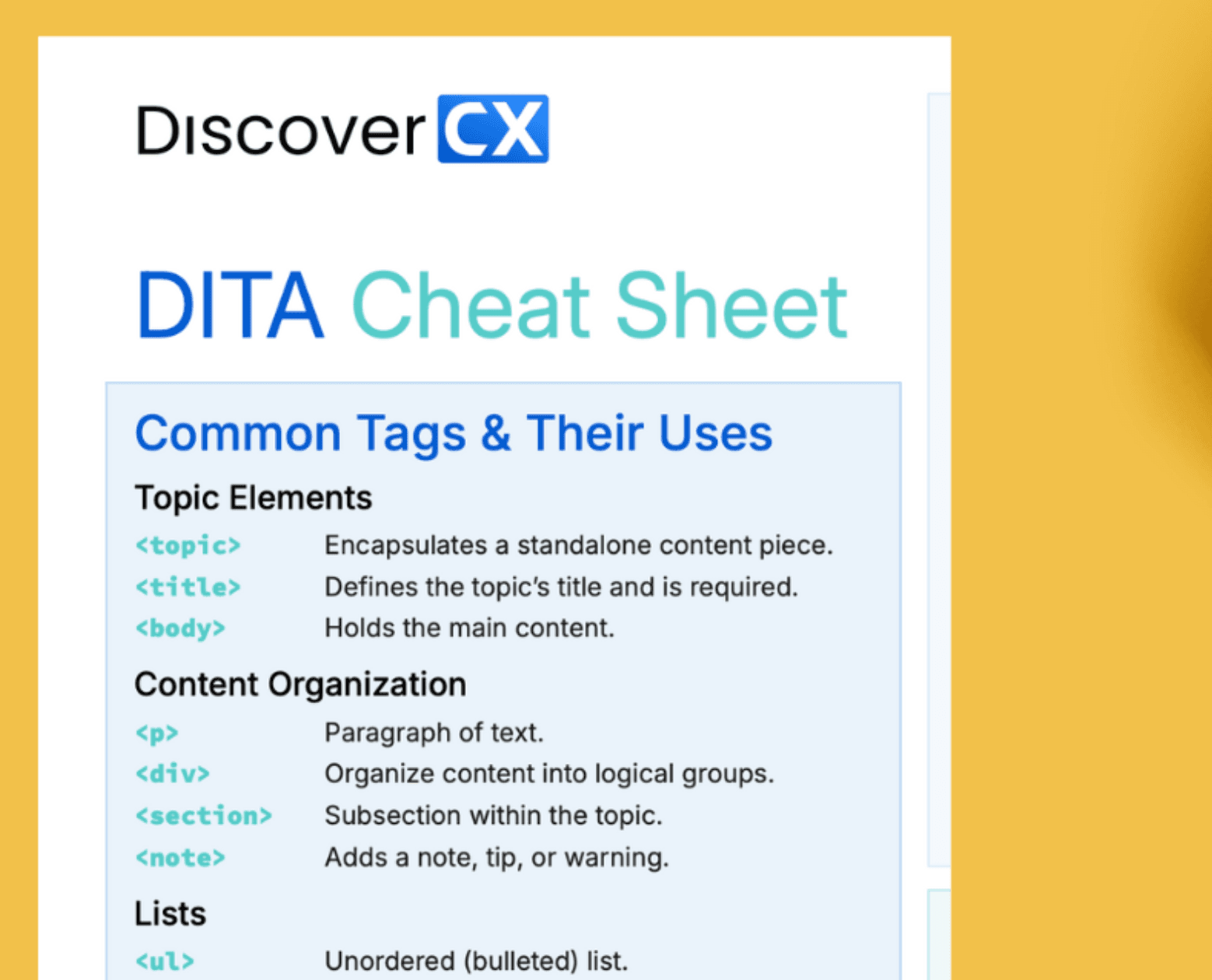
DITA made simple
Every DITA element you actually use, on one page.
A quick reference guide that simplifies the key concepts of DITA, making structured content easy to understand and implement. Breaks down essential elements like topic types, reuse strategies, and content maps so you get started with confidence.
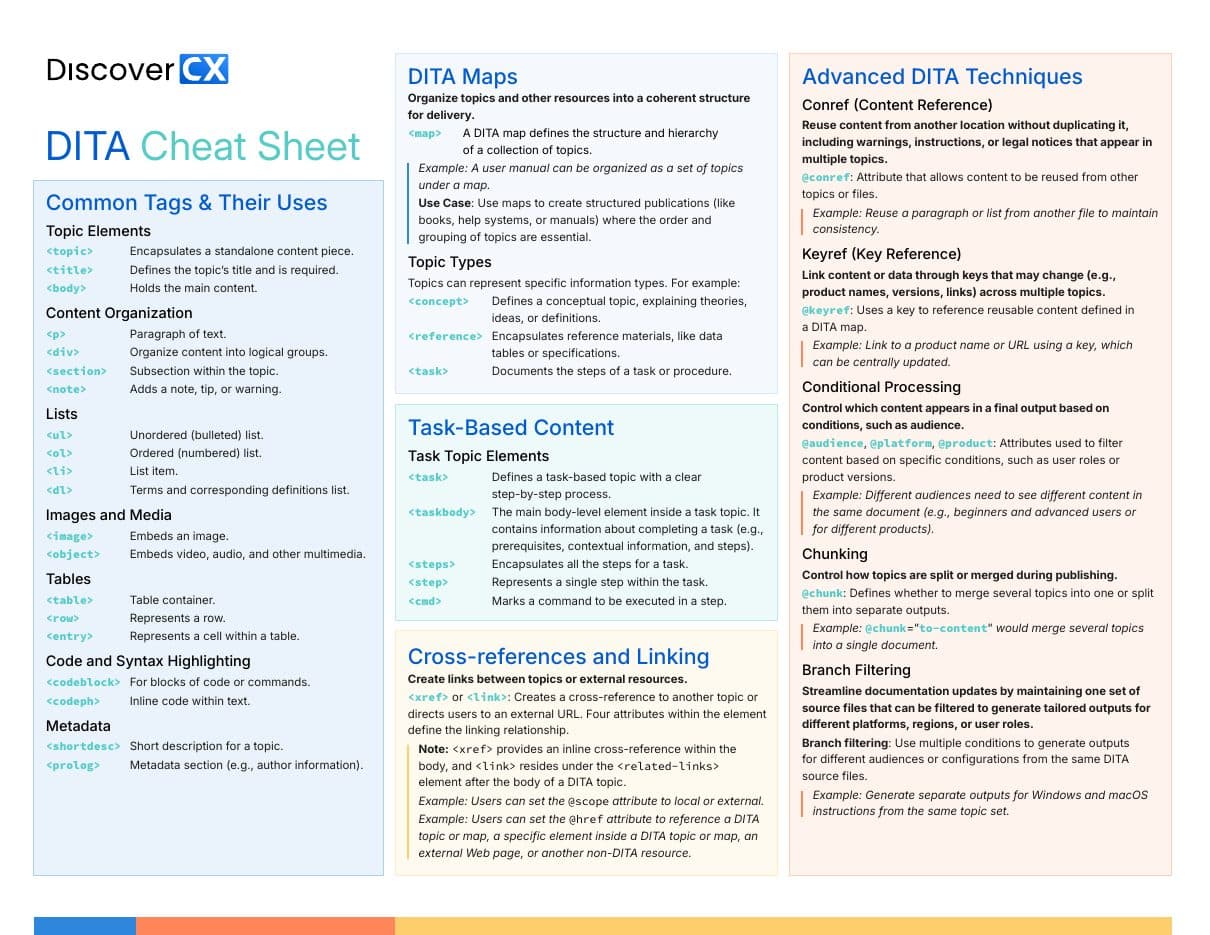 1 / 1
1 / 1Want this at your desk?
We'll send the PDF.
Drop your work email and we'll send the full PDF so you can pin it up, print it, or share it with your team.
- Full PDF emailed for offline + sharing
- Print-ready reference for your team
- No phone calls. No spam. Unsubscribe any time.
By submitting, you agree to receive related DiscoverCX updates. Unsubscribe any time. Privacy.
About this guide
What you'll learn.
A quick reference guide that simplifies the key concepts of DITA, making structured content easy to understand and implement. Breaks down essential elements like topic types, reuse strategies, and content maps so you get started with confidence.
Key insights
- Understand DITA basics, from topic types to content reuse, for greater efficiency
- When to use a concept vs task vs reference topic (with examples)
- Conrefs, keyrefs, and conditional processing — the parts that actually save time
- Practical patterns for content maps that scale
Ideal readers
- Technical writers new to structured authoring
- Content managers evaluating a move from unstructured to DITA
- Teams formalizing a style guide and reuse strategy
What's inside
The table of contents, in plain English.
Read the playbook. Then talk to the team that wrote it.
A 45-minute working session with a solution architect — your stack, your roadmap, your real authoring or delivery problem.